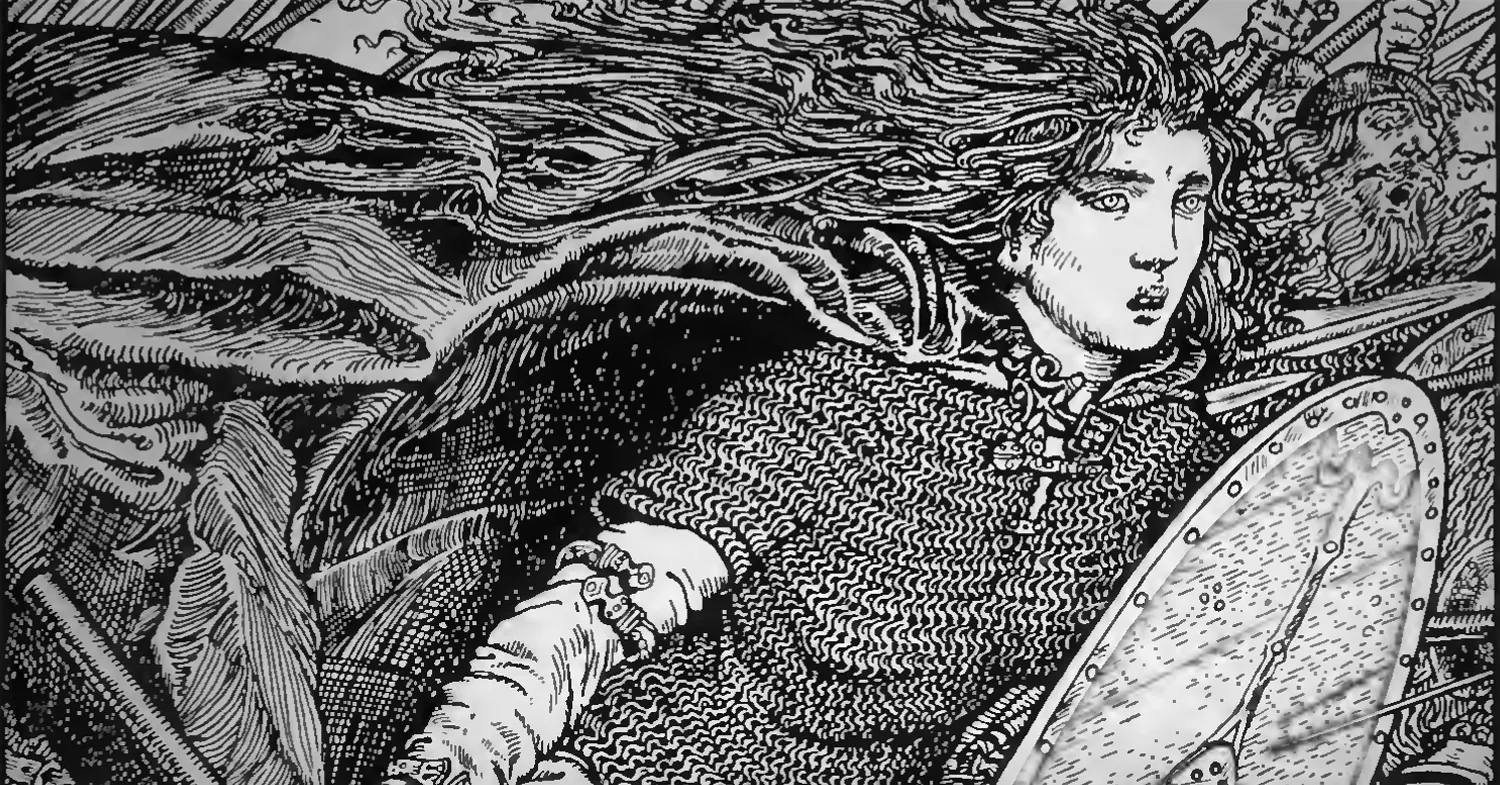
Laurent Binet’s Civilizations is a historical fiction novel that includes the occurrence of the Greenlanders’ or Icelandic Saga. The first part of the fictional novel centers on Freydis Eriksdotter, the daughter of Erik the Red. Throughout her segment of Civilizations, she is portrayed as a fierce murderer that demanded her husband to kill two brothers that she got into a fight with because they had a bigger boat. Meanwhile, she would kill the Icelanders’ remaining wives. That is only one example of a time she would murder people. Although it is uncertain whether she was a real person in history since she is mostly seen in Norse literature, her supposed existence can be traced all the way back to the 11th-13th century. Nonetheless, if she did constantly kill innocent people whenever she was simply in a bad mood, it is implausible that she could freely do it without facing any real dire consequences.
Realistically an earlier death for Freydis would’ve been more probable because according to Icelandic law, the amount of people she killed would result in the matching killings of women and men who were part of her family because under customary Norse law, the kin of the victim could receive compensation through revenge killing (Wallace). Therefore, it is very unlikely that Freydis was a ruthless killer that constantly slaughtered people without any care in the world because if it were true, it would’ve definitely been recorded in some part of history because she would’ve also caused the death of almost her entire family. This would’ve been a significant event since she was a powerful person. Freydis could’ve also died as a result of her killings because some relatives of her victims would be bound to seek revenge and target her even without the courtesy of the law. This affects the sequence of events that occur in Civilizations because without her idea to venture out further in the Southern direction, they wouldn’t have found more land.
Wallace, Birgitta. 2006. “Viking Farewell.” Beaver 86 (6): 16–24. https://search.ebscohost.com/login.aspx?direct=true&db=a9h&AN=23509301&site=ehost-live&scope=site.
